
Game Is Hard
Unico StudioPuzzle
4.8857.00 Reviews
- Version
- 1.4.1
- Installs
- 1.00M
- Age Rating
- Everyone
Screenshots
Our Review of Game Is Hard
 Analysis by Appyee
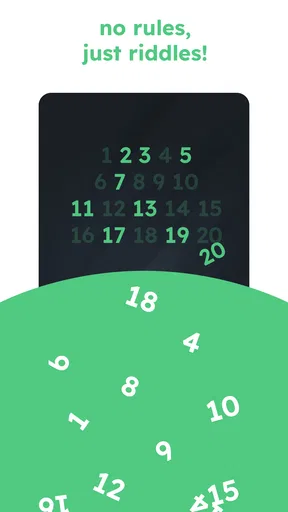
Some puzzle games reward careful planning, while Game Is Hard seems more interested in catching me off guard. Developed by Unico Studio, this free Android puzzle game presents itself as a test of whether I can look past the obvious answer. Its store summary promises difficult puzzles with unexpected solutions, and that description matches the basic appeal: I am not simply searching for a missing piece or arranging familiar shapes. I am questioning the rules of the problem itself.
That makes it a particularly interesting choice for short breaks. I can open it when I have a few spare minutes, try to solve a challenge, and put it down without needing a long uninterrupted session. The pleasure comes from the moment a strange solution suddenly makes sense. The frustration comes from the same place: when the intended trick is too far outside my expectations, progress can feel less like reasoning and more like guessing.
Why the first few puzzles make such a strong impression
The name, Game Is Hard, is unusually direct. It does not suggest a relaxing brain-training routine or a gentle collection of logic exercises. It prepares me for resistance, but the real difficulty is not always mathematical. The game’s central challenge is learning how to read each puzzle on its own terms. A familiar-looking screen may invite a familiar action, yet the correct response can depend on noticing a detail I initially treated as decoration or irrelevant background.
I enjoy that kind of design because it changes the way I approach a puzzle. Instead of immediately tapping the most visible object, I start checking the wording, the arrangement, the edges of the screen, and anything that seems slightly unusual. That habit is useful here, but it also means the game asks for a particular mindset. Players who prefer clear rules and predictable logic may find the surprises irritating rather than clever.
The immediate pleasure is strongest when I solve a puzzle without outside help. There is a small but satisfying shift from confusion to recognition: the answer was visible, but I was looking at the situation in the wrong way. That feeling gives the game a personality that standard match-three games, word searches, and conventional sudoku apps usually lack. Those alternatives can be excellent for routine relaxation, but they generally teach me a stable system and let me improve within it. This game keeps asking me to adapt.
At the same time, “unexpected” should not automatically be confused with “fair.” A surprising answer feels rewarding when I can explain it afterward. If the solution depends on a very narrow interpretation or an action that I would never reasonably test, the lesson becomes harder to appreciate. My advice is to give each puzzle a deliberate second look before deciding that it is impossible, but not to spend an unlimited amount of time forcing an answer that no longer feels logical.
A good fit for curious problem-solvers
I would recommend it first to players who enjoy lateral thinking, visual trick questions, and puzzles that challenge assumptions. It suits someone who likes discussing a solution after finding it, because the best moments are often about the idea behind the answer rather than the speed of the tap. It can also work well for a parent and child or two friends solving together, provided both players are comfortable with occasional trial and error.
It is less suitable for anyone looking for a calm, highly predictable activity. If I want to complete a few familiar rounds while listening to a podcast, a conventional word game may be a better companion. Game Is Hard demands more attention than its short-session format might suggest. Even when a level takes only a little time, I need to be mentally present enough to challenge my first assumption.
How the session rhythm feels in everyday use
The strongest practical quality is the game’s suitability for fragmented time. I can imagine opening it while waiting for a drink, sitting on public transport, or taking a short break between tasks. A puzzle that resists me does not require me to commit an entire evening. I can make an attempt, think about the trick while doing something else, and return later with a different perspective.
That rhythm is different from games built around long runs, timed matches, or resource management. Those formats often punish interruptions because progress depends on maintaining momentum. Here, the mental work is more self-contained. The main cost of stopping is simply losing the train of thought, not losing a carefully built session. For me, that makes the game easier to fit around ordinary life.
There is an important trade-off, though. Short puzzles can create a strong temptation to keep going after one more attempt. When I am close to understanding a solution, the compact format makes another try feel harmless. That can turn a five-minute break into a longer stretch of tapping and reconsidering. The game does not need long sessions to be absorbing; its individual challenges can provide enough unfinished business to pull me back.
For a realistic everyday scenario, I would use it during a commute with one simple rule: play only until the next stop or planned interruption. If a puzzle is still resisting me, I would leave it rather than immediately search for the answer elsewhere. The pause often helps because the game’s unusual solutions benefit from mental distance. Returning after a few minutes can be more productive than repeatedly poking at the same screen.
Why interruption tolerance matters here
Many mobile puzzle games advertise quick play but still make stopping awkward. A level may be timed, a streak may be at risk, or a chain of moves may become difficult to reconstruct. The appeal of this title is that its core experience is based on solving individual problems, so it naturally supports a stop-and-return routine. That makes it more useful for people who play in small gaps rather than during dedicated gaming sessions.
I would still make sure to pause at a sensible point instead of closing the app in the middle of an experiment. When I am testing a possible solution, remembering what I already tried matters. The game’s challenge is conceptual, so a short note to myself—such as “check the wording” or “try interacting with the background”—can be surprisingly helpful when I return. This is one of the few puzzle games where writing down the question I am asking can be more valuable than remembering the exact tap sequence.
The free price also lowers the barrier to trying it. There is no purchase required to begin, although in-app purchases range from $0.99 to $44.99 per item. I would keep that in mind if I were handing the device to a child or allowing casual purchases on a shared account. The game is rated Everyone, which makes it broadly approachable, but an age rating does not remove the need for sensible purchase controls.
Returning after a pause without losing the thread
A good short-session game should make re-entry easy, and this one’s puzzle-by-puzzle nature helps with that. I do not need to remember a complicated build, a map route, or a collection of temporary bonuses. I mainly need to remember what assumption I made and why it failed. That simplicity makes returning less intimidating than going back to a strategy game after several days away.
My preferred way to handle a difficult level is to separate observation from action. First, I describe what is visibly present. Then I list what I have already tried. Finally, I look for an element I have mentally excluded. This sounds basic, but it is especially useful for unexpected-solution puzzles because the obvious object is often a distraction. The method reduces random tapping and gives each attempt a reason.
Another useful habit is to change the scale of attention. I might inspect the central object during one attempt, then consider the surrounding layout, the wording, or the relationship between items during the next. If I keep focusing on the same detail, I am usually repeating a failed approach rather than solving the problem. That is a practical technique I would carry into other lateral puzzles, and it makes the difficulty feel more manageable.
There is also a social use case. If I am stuck, showing the puzzle to another person can be more effective than asking them to solve it immediately. I can explain my interpretation, and their reaction may reveal which assumption is blocking me. Because the game’s solutions are intended to be unexpected, it is entertaining to compare the first answers different people notice. This gives the title a small conversation value that solitary logic apps do not always have.
When a hint or outside help becomes reasonable
I do not think every puzzle should be solved without assistance. If I have tested the obvious interactions, reread the prompt, and considered the surrounding layout, looking for a nudge can preserve the fun. The important distinction is whether help confirms a line of reasoning or simply reveals a random action. In the first case, I learn how the game thinks. In the second, I may complete the level without gaining confidence for the next one.
For that reason, I would avoid immediately searching for full solutions after a single failed attempt. Doing so can turn the experience into a sequence of instructions rather than a puzzle game. A better compromise is to set a personal limit: make several thoughtful attempts, take a break, and only then seek the smallest available clue. This keeps the discovery intact while preventing one stubborn challenge from becoming a chore.
Repetition, difficulty, and the question of replay value
The game’s replay value depends less on endlessly repeating completed puzzles and more on how much I enjoy the solving process itself. Once I know an answer, the surprise is naturally reduced. I may still revisit a level to show someone else or to appreciate how the trick was constructed, but I am not expecting the same discovery twice. That is a meaningful difference from games with procedural rounds, score chasing, or endlessly changing boards.
In my view, the lasting appeal comes from the variety of wrong assumptions. Each new challenge can make me suspicious of a different habit: tapping the largest object, following the apparent instruction literally, or assuming that every visible element has only one purpose. If the puzzles continue to introduce fresh ways of redirecting attention, the experience can remain engaging even though individual solutions are not repeatable.
The limitation is that frustration can also repeat. When several challenges in a row rely on the same kind of misdirection, the surprise may become predictable. I may start testing the game’s favorite trick instead of solving the puzzle naturally. That can weaken the feeling of discovery. The best experience comes when I cannot tell in advance whether a level wants careful observation, a literal interpretation, or a completely different perspective.
This is where it compares most clearly with ordinary puzzle alternatives. A sudoku app offers replay through new number layouts and gradual improvement. A match-three game offers replay through changing boards, combinations, and goals. A word puzzle can remain fresh through vocabulary and daily challenges. Game Is Hard offers a more authored kind of replay value: I return because I want another surprise, not because the same system generates an endless supply of interchangeable rounds.
That makes it a stronger choice for players who value novelty over mastery. If I want to measure improvement through faster completion times or increasingly complex strategies, another puzzle category may serve me better. If I want a compact collection of moments that make me say, “I should have noticed that,” this game has a clearer identity.
What the technical details mean for potential players
The current version is 1.4.1, and the minimum operating system is Android 7.0. In practical terms, that gives the game a fairly broad reach among Android users, including people who are not using a recent phone. I would still pay attention to how comfortably the game runs on an older device before settling into long sessions, especially if I prefer quick responses when testing an idea.
Its popularity also suggests that the concept has found a sizeable audience: the game has more than one million installs, with an average rating of 4.8 from around thirty-two thousand ratings. Those figures make it easier for me to take the premise seriously, but they do not guarantee that its particular style of trick puzzle will suit everyone. A high average can reflect strong enthusiasm from the right audience, while a player who dislikes ambiguity may still find the same design tiring.
The release date is June 2, 2026, so I would treat the listed version and store details as part of the current snapshot of the app rather than as a promise that every future update will feel identical. Unico Studio has chosen a very specific direction here: difficulty built around unexpected solutions. That focus is more important to my decision than the raw rating, because it tells me what kind of challenge I am agreeing to.
Who should play it, and who should choose something else
I think Game Is Hard is best for an Android player who wants a free puzzle game for brief, mentally active breaks. It works particularly well for people who enjoy lateral thinking and do not mind being wrong in unusual ways. It is also a good conversation starter when two people want to solve something together without learning a large rule set first.
I would be more cautious if I were recommending it to someone who wants relaxation without friction. The game’s title is not exaggerating the intended attitude. Some players will enjoy the challenge immediately; others may feel that the solution is being withheld behind a trick rather than earned through clear logic. If that second reaction sounds familiar, a traditional word, number, or tile puzzle will probably offer a fairer and more comfortable routine.
I would also skip it when I need a game that can run quietly in the background while I concentrate on another task. The short format is interruption-friendly, but the puzzles themselves deserve attention. It is not passive entertainment. The best results come when I stop, inspect, question my assumptions, and accept that the first apparent answer may be bait.
For children, the Everyone rating makes it broadly accessible, and the puzzles could encourage flexible thinking. I would nevertheless supervise purchases because paid items are available inside the free game. I would also consider the child’s temperament: a curious child who enjoys jokes and trick questions may love it, while one who expects every challenge to follow a transparent rule may need encouragement to treat mistakes as part of the experience.
My casual verdict after fitting it into real breaks
My overall impression is positive, but specific. Game Is Hard is not my first choice for endless replay, quiet background play, or methodical skill building. Its strength is the compact shock of a solution that forces me to rethink what I am seeing. That makes it unusually effective during short breaks, especially when I want something more engaging than scrolling but less demanding than a long game session.
The best way to enjoy it is to play patiently without overcommitting. Read carefully, test a small number of purposeful ideas, and step away when the puzzle starts producing only random guesses. Returning later is not a sign that the game defeated me; for this style of design, a pause can be part of the solving process. I would also keep purchase controls in place and remember that the free entry point does include optional paid items.
With its Everyone rating, Android 7.0 support, and broad install base, it is easy for many Android users to try. The 4.8 average from roughly thirty-two thousand ratings is encouraging, but the real question is whether I enjoy puzzles that challenge my assumptions more than they test a stable system. If I do, this is a clever companion for commutes, waiting rooms, and short evening breaks.
My casual verdict: I recommend Game Is Hard to curious puzzle fans who want immediate moments of surprise and can tolerate occasional ambiguity. I would choose a more conventional alternative for dependable repetition or clearly measurable progress. Its appeal is not that every puzzle feels effortless or perfectly transparent; it is that, at its best, one small insight turns an apparently impossible screen into an answer I cannot believe I missed.
Verdict
Strengths of Game Is Hard
- Simple controls make the game easy to start playing.
- Short levels are suitable for quick gaming sessions.
- Challenging obstacles provide a strong sense of achievement.
- Minimalist presentation keeps attention on the gameplay.
- Retrying after failure is quick and convenient.
Limitations of Game Is Hard
- Difficulty can feel frustrating, especially for casual players.
- Limited variety may make the gameplay repetitive over time.
- Some levels require precise timing rather than strategic planning.
- Progress can feel slow when repeated attempts are needed.
- The game may offer little appeal after all challenges are completed.
Other Releases by Unico Studio
View All
Brain Test 2: Tricky Stories
Trivia4.7

Brain Test: Tricky Puzzles
Trivia4.7

Who is? Brain Teaser & Riddles
Trivia4.7

Brain Test 3: Tricky Quests
Trivia4.7
Similar Picks in This Category
View All
Block Blast!
HungryStudio4.8

Braindom: Brain Games Test
Lahana Game Studio4.6

AMAZE!
CrazyLabs LTD4.6

Sudoku - Classic Sudoku Puzzle
Oakever Games4.7

Art Puzzle - Puzzle Games
Easybrain4.8

Amaze GO!
Oakever Games4.9
Frequently Asked Questions
What is Game Is Hard, and what kind of gameplay does it offer?
Game Is Hard is a challenging game designed around difficult obstacles, precise controls, and trial-and-error progression. Instead of offering a relaxed experience, it tests your timing, patience, and ability to learn from mistakes. Levels may appear simple at first, but unexpected hazards and demanding mechanics make each successful section feel rewarding. It is best suited to players who enjoy frustration, persistence, and gradually improving their performance.
Is Game Is Hard free to download and play?
The game may be available as a free download, although the exact pricing model can depend on the Android or iOS version and the region where it is downloaded. Before installing, check the store listing for information about advertisements, optional purchases, or premium content. Some features may be accessible immediately, while others could require payment. Reviewing these details beforehand helps avoid surprises during gameplay.
Does Game Is Hard require an internet connection?
Whether an internet connection is necessary depends on the version and features included in the game. Core levels may work offline, which is convenient for playing while traveling or when mobile data is unavailable. However, advertisements, updates, cloud synchronization, leaderboards, or other online services may require connectivity. It is recommended to launch the game once while connected and check which functions remain available offline.
Is Game Is Hard suitable for children and casual players?
Game Is Hard can be suitable for older children and casual players who enjoy challenging gameplay, but its difficulty may not appeal to everyone. Repeated failures are an important part of the experience, and some levels require careful concentration and quick reactions. Parents should review the store age rating, advertising policy, and any in-app purchases before allowing younger players to download it.
What should I check before downloading Game Is Hard?
Before downloading Game Is Hard, check that your device meets the required operating-system version and has enough free storage for the installation and future updates. It is also worth reviewing recent user feedback about controls, advertisements, performance, and compatibility. Confirm the developer name and download the game only from an official app store to reduce the risk of installing an unofficial or modified version.
Play our best games!


